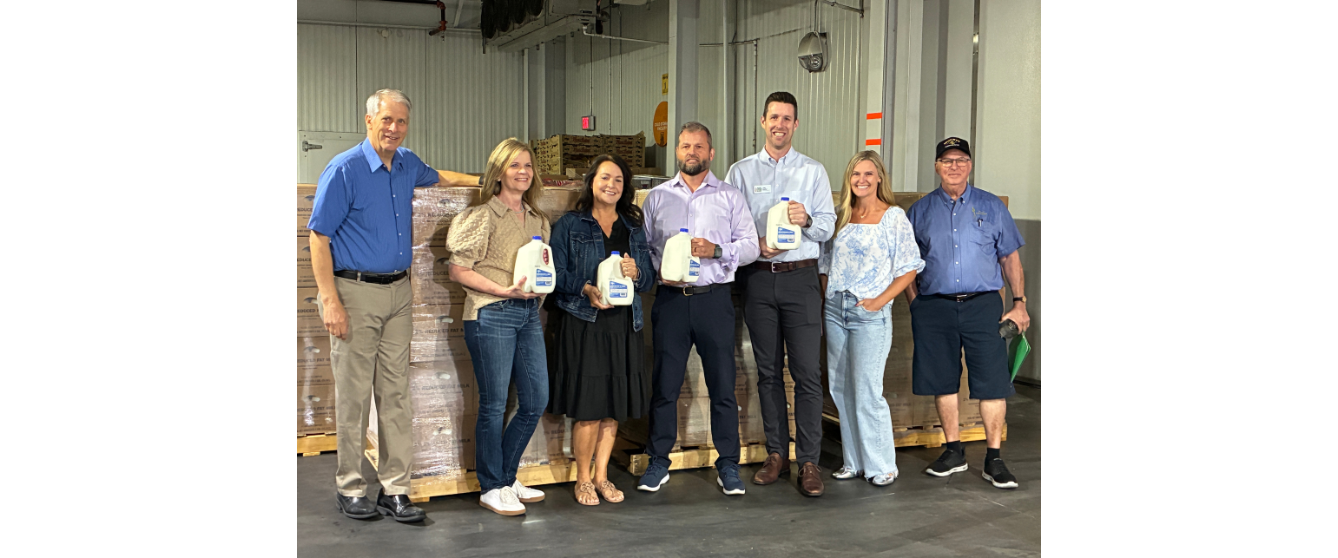
Church Donates Over 4,000 Gallons of Milk to Catholic Charities and East Texas Food Bank

he Church of Jesus Christ of Latter-day Saints is supporting local hunger relief efforts by delivering 4,320 gallons of 2% milk to East Texas Food Bank and Catholic Charities on Wednesday August 13.

TYLER – The Church of Jesus Christ of Latter-day Saints is supporting local hunger relief efforts by delivering 4,320 gallons of 2% milk to East Texas Food Bank and Catholic Charities on Wednesday August 13.

“We’re incredibly grateful for the partnership, generosity and grace of The Church of Jesus Christ of Latter-day Saints in providing milk to our pantries,” said Dave Woodyard, CEO of Catholic Charities Dallas. “Collaborations like these make a huge difference in serving the most vulnerable in our community.”

Milk is one of the most requested—and hardest to obtain—items at food banks, according to Feeding America.

The truck will first unload half of the donation at Catholic Charities in Dallas and then the rest to East Texas Food Bank in Tyler.

As the top food source of calcium, vitamin D, and potassium, milk plays a key role in nutrition. But for many children and families in need, even basic staples like milk—and the essential nutrients it provides—are often out of reach. This donation will aid families as they plan for back-to-school necessities.

“We’re grateful for the opportunity to partner with Catholic Charities Dallas to provide milk to our community,” said Peter Harris, communications director for the Church in the Dallas–Fort Worth metro area. “This delivery was so needed in our area.”

Harris added, “We are thankful for the work Catholic Charities does day in and day out to address food insecurity in Dallas. Together, we share a commitment to alleviating hunger, and we look forward to continued opportunities to support this vital mission.”

DFW ranks third among U.S. metro areas for the highest number of people facing hunger, according to Feeding America.

The Church has a long-standing partnership with both Catholic Charities Dallas and East Texas Food Bank, providing volunteers and donations as needs arise. Both organizations have the infrastructure to distribute the milk efficiently across East Texas and the DFW area. The Church was also recognized with the “Hunger Hero Award” for their outstanding contributions to the East Texas Food Bank.

“We are privileged to work so closely with these partners to ease the burden in our communities,” says President Charles Rhodus, Stake President and leader of the Church in Tyler area. “Our goal is to give as Jesus Christ would give to those in need.”

The Church and these two nonprofit partners share the goal of alleviating hunger and helping individuals in need, with an emphasis on treating everyone with dignity and respect as they work toward greater self-reliance.

This donation originated from the Church’s dairy operations in Utah. One of the Church’s regional humanitarian priorities is to help meet the basic needs of those experiencing hunger. Texas currently leads the nation in food insecurity.

Turkey Pinwheels

Turkey Pinwheels

Picture Credit: eatingbirdfood.com

Keyword: Entrée
Ingredients
  • 4 whole wheat tortillas (10 inch)
  • 1 package oven roasted turkey, sliced
  • 1 head lettuce
  • 1 package sliced cheddar cheese
  • 1 5.3 oz cup plain non-fat Greek yogurt
  • 1 package dry ranch seasoning
Instructions
  1. In a small bowl, mix together 1 tablespoon of the ranch seasoning packet with the Greek yogurt.

  2. Lay the whole wheat tortillas on a flat surface. Spread a thin layer of the ranch dip on each tortilla.

  3. Layer two lettuce leaves over each tortilla, followed by two slices of turkey and one slice of cheddar cheese.

  4. Starting with the edge closest to you, fold over the tortilla so it sticks, and then roll it up as tightly as possible, tucking in the fillings as you go.

  5. With the seam side facing down, slice the roll into 1" wide pieces.

  6. Arrange on a plate and enjoy!

Tyler ISD Schools Prepare for 35th Annual Pantry Raid

Tyler High and Tyler Legacy are coming together again this year before their big football rivalry to raise funds and food to support the East Texas Food Bank’s BackPack program as part of the 35th Annual Pantry Raid.

The East Texas Food Bank and the Tyler Independent School District host the annual event. Since the pantry raid began in 1991, students have raised more than 1.9 million meals.

“Child hunger is a concern in our region. According to new Feeding America Map the Meal Gap statistics, 1 in 4 East Texas children are food insecure,” said David Emerson, CEO of the East Texas Food Bank. “Many student’s families depend on the ETFB BackPack program to help fill the weekend hunger gap, so we greatly appreciate the students for keeping this event going for 35 years!”

Last year students raised funds and food to provide 117,243 meals. Tyler High and Tyler Legacy students will collect food and funds over the next several weeks. Monetary donations will support ETFB’s programs that serve Tyler ISD students, such as the BackPack Program. More than 8,800 East Texas children receive BackPacks every weekend filled with nutritious, kid-friendly food.

“This is a tradition our students look forward to every year,” said Jennifer Hines, Tyler ISD Chief Communications Officer. “Their involvement makes a real difference for classmates and families who rely on the BackPack program for weekend meals. Each campus brings its own creativity to the effort, engaging students and families while reinforcing the importance of service and community support.”

The results are announced at halftime during the two Tyler school’s annual football game on Friday, September 5, at Christus Trinity Mother Frances Rose Stadium. Donations can be made at www.tylerpantryraid.com

USDA’s Announcement of Local Food Purchases to Support Communities Facing Hunger

Feeding America welcomes the U.S. Department of Agriculture’s announcement of its intent to purchase $230 million in nutritious food—including fresh seafood, fruits, vegetables, and beans—for distribution through programs like The Emergency Food Assistance Program (TEFAP). This food is urgently needed and will help get more meals onto the shelves of food banks and pantries across the country—supporting both the people who grow our food and the people working hard to build a better future for themselves and their families.  

We’re especially grateful to the U.S. farmers, growers and producers whose work makes this possible—and to USDA for its ongoing partnership. This investment ensures that food grown by farmers in America stays in our communities. We stand ready, through the Feeding America network of more than 200 food banks and 60,000 faith-based and community organizations, to help ensure this food reaches the people who need it most. 

Tens of millions of people in the United States continue to face challenges accessing the food and resources they need to thrive. Meeting this challenge requires all of us—government, agriculture, nonprofits, and local communities—working together. This investment is one example of how that collective action can help ensure everyone has access to the food they need to thrive.

Feeding America is committed to an America where no one is hungry. We support tens of millions of people who experience food insecurity to get the food and resources they say they need to thrive as part of a nationwide network of food banks, statewide food bank associations, food pantries and meal programs. We also invest in innovative solutions to increase equitable access to nutritious food, advocate for legislation that improves food security and work to address factors that impact food security, such as health, cost of living and employment. We partner with people experiencing food insecurity, policymakers, organizations, and supporters, united with them in a movement to end hunger. Visit FeedingAmerica.org to learn more.

Senate Budget Plan Would Slash SNAP and Shift Billions in Costs to Texas

The U.S. Senate passed its version of the budget reconciliation bill Tuesday, and while it differs in some respects from the House proposal, it still represents the most sweeping rollback of the Supplemental Nutrition Assistance Program (SNAP) in U.S. history. The bill would slash an estimated $186 billion from SNAP and fundamentally alter the program’s structure by shifting billions in costs to states like Texas.

Since the modern-day inception of SNAP (or “Food Stamps,” as it was formerly known) 50 years ago, the federal government has always paid 100% of the cost of benefits, guaranteeing that Americans would have access to critical food assistance during times of individual crisis, economic downturns, and natural disaster no matter where they live.

“If enacted, this bill would represent the largest rollback of food assistance in U.S. history,” said Celia Cole, CEO of Feeding Texas, the state association of food banks. “The consequences would be profound and devastating. Millions of Americans—including children, seniors, veterans, and working families—could go hungry. In addition to the significant and undue harm for vulnerable Americans, the bill also deals a blow to farmers, grocers, and our state and local economies.”

The Senate bill would require states with SNAP error rates above 6% to pay between 5% and 15% of food benefit costs. It would also increase the state share of administrative costs from 50% to 75%. For Texas, this would mean an additional $89.5 million per year in administrative costs starting in FY2026, and $716 million per year in food benefits beginning in FY2028, assuming the state maintains its current error rates. These are new costs that Texas has never had to bear before.

Because Texas must balance its budget annually, these new obligations would force lawmakers to either raise new revenue; divert revenue from other essential services like education, healthcare, or public safety; or make the painful decision to reduce SNAP benefits for food insecure Texans.

East Texas Food Bank Response

“Cuts to SNAP will only deepen food insecurity in our region, which already exceeds the state average,” said David Emerson, CEO of the East Texas Food Bank. “Slashing SNAP will push even more families into crisis, especially in rural areas like East Texas where the program is a critical lifeline. These cuts will have immediate and devastating consequences — more empty refrigerators, more hungry children, and more impossible choices between food, medicine, and rent. The ripple effects will hit local economies hard, stalling recovery and deepening poverty. We urge lawmakers to act now — protect and strengthen SNAP before more lives are put at risk.”

“SNAP is a lifeline for millions of Texans, especially during times of crisis,” Cole said. “The program works because it’s federally funded and responsive to fluctuations in the economy. Offloading benefit costs to states would undermine SNAP’s ability to respond to economic downturns and natural disasters—precisely when families need help the most, and state coffers are most depleted.”

Beyond the cost shift, the bill includes several policy changes that would directly reduce access to food assistance:

  • Expanded Work Requirements: The bill would subject more seniors (up to age 65) and parents (with children as young as 14) to a harsh three-month time limit unless they can document 20 hours of work per week. It also eliminates exemptions for veterans, people experiencing homelessness, and former foster youth from the time limit.
  • Elimination of SNAP-Ed: The bill would fully eliminate SNAP-Ed, an evidence-based program that helps state agencies, food banks, and other local organizations provide nutrition education to thousands of Texas families.
  • Limits to the Thrifty Food Plan: By restricting future updates to the Thrifty Food Plan—the formula used to calculate SNAP benefits—the bill would depress benefit levels for years to come, making it harder for families to afford groceries.

“These changes don’t just cut costs—they cut a lifeline for vulnerable Americans,” Cole said. “This is a massive cut that goes well beyond reducing waste and increasing efficiency. These provisions target families with kids, seniors, veterans, and those most in need of support. They dismantle the very tools that help Texans put food on the table and build healthier futures.”

SNAP already provides modest support—just six dollars per person per day—but it plays an outsized role in fighting hunger. Cutting this support would increase food insecurity in Texas and place even more pressure on charitable food systems.

Food banks across the state are already stretched thin. Over the past year, the Feeding Texas network has seen a surge in demand not witnessed since the height of the pandemic. Families are struggling to afford groceries, healthcare, rent, and transportation—all while inflation continues to squeeze household budgets.

“From seniors on fixed incomes to veterans seeking employment to parents trying to feed their children, the need is urgent—and growing,” Cole said. “The Senate’s proposal would only deepen this crisis, and food banks do not have the resources to fill the gap.”

The Feeding Texas network includes 20 food banks and over 3,000 local partners, most of them faith-based, working together to fight hunger in every corner of the state. But no charitable effort can replace the scale and impact of SNAP.

“Texas food banks are united in our plea: We urge members of the House to stop this bill from moving forward, to reject these harmful provisions in conference negotiations, and to protect the integrity of SNAP for the millions of Americans who rely on it,” Cole said. “A federal budget should reflect our nation’s shared values of dignity, opportunity, and a commitment to ensuring that no one in this country goes hungry. Lawmakers must come together to craft a more balanced and compassionate path forward—one that protects access to food for all.”